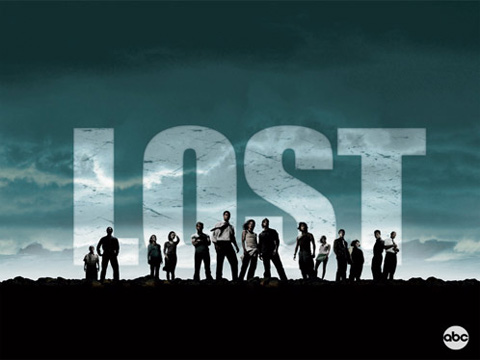
For the past six years, I’ve followed the roller-coaster ride that has been the show Lost. Sure, the mythology of the show piqued my interest, but more than anything what sold me on the show was the writing. It was character driven and while they would throw all kind of freaky things at the viewer, those things were never so interesting as the way characters reacted to them.
From the start, John Locke was a character for whom I felt great affinity. The kind, self-assured smile he offered to Walt, or the Godfather-esque orange-wedge-in-the-mouth smile in an attempt to comfort Kate demonstrated a quiet, knowing kindness. His relishing of life as he spread his arms in the rain after the plane crash, and the odd mojo he seemed to work by having all the right answers– like sitting there on the beach and carving a dog whistle to locate the missing labrador Vincent while others exhausted themselves looking– showed me that he wasn’t an ordinary character and I eagerly anticipated getting to know him further. The reveal that he was paralyzed before the plane crash in the fourth episode was heartbreaking and locked (heh, pun) this character, played brilliantly by Terry O’Quinn, into the position of my favorite character on the show, a spot he occupied all the way to the end. While I liked Locke best, though, I can say similarly praise-worthy things about nearly every character on the show.
My point is that, yes, fantastical things happened on the show, but it wasn’t those things that mattered– it was the little things a character did.
One of my all-time favorite scenes in Lost came in the first season finale. While castaways were worked up over the missing Aaron, the prospect of the “Others”, and blowing open a hatch in the middle of the jungle, the flashback portion of the episode took us all back to that fateful day when everyone boarded flight Oceanic 815. The climax of that entire sequence was the dialogue-less boarding of the plane, where we saw all the familiar faces that we’d come to know over the past 23 episodes walk towards the calamity of the plane crash. What made it all the more poignant is that these characters, who would come to mean so much to each other, made their way to their seats in pure obliviousness, consumed by their own problems, passing by potential friends, lovers, and comrades with not so much as a second thought. But for the plane crash, these bonds would never have been forged. Divine intervention? Fate? Lost was a show about fate and fate’s role in the face of science, and the lesson of a scene like this is there if one only takes it– look around you. Don’t walk blindly by. Had the plane not crashed, the lives of everyone on board would have been much different– and worse for it. Combined with the slow, melancholy music of Michael Giacchino (I bought the soundtrack for this song alone), it’s a scene that has stuck with me for six years and I’m sure will stick with me for years to some.
I mention it because the finale absolutely relies upon this idea of characters mattering more than… I’d say “plot”, but that’s misleading. There is a great story in Lost, one that reaches a satisfying conclusion. There are monsters, immortal characters, hatches, mysterious initiatives, polar bears, four-toed statues, hieroglyphics, time-travel, electro-magnetism, and all manner of freaky things. But, the show is not really the story of the island, or hatches, or smoke monsters, or Others. It’s the story of these characters, each of them broken in one way or another, finding themselves thrust into a common circumstance and being changed by their interactions with one another. That scene above is emblematic of the show far more than any encounter with the smoke monster or hatch ever was.
So, the finale. Background, first. Lost has had an interesting structure from the get-go, one that was not consistent throughout the entire series. For the first three seasons, storylines in episodes were divided between the present– on the island, after the crash– and flashbacks to show us the lives of these castaways before they all met one another. Like I said, this show was about characters and these flashbacks are all about explaining who these characters are by showing us exactly what they went through.
The game changed with the fourth season, where you still had the “present” on the island (at this point they were in the process of actually getting off of it), but instead of flashbacks you had “flash-forwards”, showing us what happened to the eight or so castaways who successfully made it off the island and why Jack (Matthew Fox) was adamant that they’d made a mistake and had to return to it. The deviation led to some adjustment, but made for compelling viewing as you saw present-Jack proceed on a course that we knew future-Jack ultimately regretted.
Not content to leave us with our new equilibrium, though, the fifth season abandoned the flash-forward approach because by the end of the fourth season the present had caught up to where the flash-forwards started. Instead we had the dual track of “presents”, with the castaways that had been left on the island being bounced through time-space, ultimately settling in the 1970’s era in the island (Hello, Dharma Initiative!), while those that had gotten off the island found their way back to it (their return sending some of them to the ’70’s to collect their comrades while the rest were in the present). By the end of the season, those in the ’70’s hatched a scheme to detonate a bomb and destroy the apparatus that caused their plane to crash in the first place, hoping it would change history and keep them from crashing on the island at all (consequently never meeting each other, never going back in time, etc. paradox city). The season ended with a blinding flash of white as the bomb detonated. (It was a long year till season six. 😉 )
Which brings us to season six, the final season. Did the bomb work? What were the answers to all our burning questions? How would it end? We began with confusion. Instead of flashbacks or flash-forwards, we had something new– a flash-sideways. While our castaways in the ’70’s found themselves back in the present (leading them to conclude that the bomb plan failed), we saw another life for them, as well. One where Oceanic 815 never crashed. The island was on the bottom of the sea. People who had never been on the plane the first time suddenly were. Crucial bits of backstory were different. The con man was now a cop. The unlucky guy was now lucky. The troubled, solitary divorcee was now a content divorcee with a son. And those who had been married and estranged, were now unmarried and happily close. My initial thought was that we were looking at a Back to the Future 2 scenario, where changing the one event in the past (the bomb) caused a rippling effect that caused the future to branch off, so while our present still existed, it was no longer the central timeline.
This was, to say the least, confusing as hell. And I couldn’t shake the unsatisfying feeling that this alternate reality would be a rather cheap way of giving everyone a “happy ending” since dead characters now lived and all the sacrifice and turmoil they’d gone through for the past five seasons would have ultimately been meaningless because it never happened. On the one hand I wanted a happy ending, but I wanted it legitimately.
Things started to change when halfway through the season a few of the characters in the flash-sideways started waking up and experiencing memories of their lives on the island. They were connected somehow. We just didn’t know how yet. Until the finale.
I will be discussing the finale in-detail now, so I’ll place a cut here so you can avoid it if you wish (but if you follow the link, I have more embedded video, so I hope you’ll brave it. 😉 ).
Okay. Thanks for coming. So, the crux of the finale is these flash-sideways scenes. Yes, there’s a lot of great action happening on the island as the smoke monster faces off against newly-christened guardian Jack, but that’s the story side of the finale. The sideways is the character side, and that’s where Lost shines. By the time of the finale, two major characters have awakened to their past island lives, Desmond and Hurley, and both are going around collecting their friends one-by-one and putting them in situations where they “wake up”, too. This leads to many wonderful scenes– the stupid, happy grin on Hurley’s face as he sees his best friend Charlie (dead since the season three finale) was enough to bring a tear to my eye. With each “awakening”, we see the important moments of their island lives flash before their eyes and, I won’t lie, it’s moving as hell. This is especially true for characters, like Charlie, who have died along the way. Pain felt at their passing gives way to unbridled joy at the reunion. When John Locke awakes– the real John Locke, not the smoke-monster possessed John Locke of the last two seasons– I could not keep a smile off my face because the character I’d been attached to since day one was finally back. And the sorrow of his life was replaced by contented happiness.
The final character to be awakened, appropriately enough, was Jack. Our focal character. That occasion is saved for the final sequence, which is so moving I’ve already re-watched it several times. Everyone has gathered into the church where Jack had planned on holding his father’s funeral and we’ve been led to believe that his father’s body (on Oceanic 815) had finally been delivered there. As he places his hand on the coffin, the memories come flooding back and Jack is overwhelmed. Then he discovers the coffin is empty and his father is standing right behind him. “How ya’ doing, kiddo?”
The long and short of it– no, the flash-sideways is not a flash-sideways at all. For all intents and purposes, it’s purgatory. It is the place everyone comes to till they accept the fact that they’ve died, then they can move on to whatever comes next (heaven or hell, or something else entirely, it’s ultimately irrelevant). I know some concluded that this meant everyone died in the plane crash and everything was purgatory, but that’s not it at all. Everything that happened, happened– and once everyone died, they found themselves in the “purgatory” to find the ones they loved before moving on. When they died ultimately didn’t matter, because there was no “now” in purgatory– time had no meaning. Some died before Jack, some died long after, their presence doesn’t mean they were all dead at the same time, only that they eventually died– everyone does. The crux was that everyone came to the same place in the end till they were ready to move on as a group, because the time they spent together was the most important time of their collective lives.
As Jack joins his friends– his family– in the main church, their reunion is intercut with his actual death on the island, as, having saved the island and given the few survivors time to escape on a plane, he stumbles back to the bamboo thicket where he first awoke in the pilot episode and falls onto his back.
And scene. The dog did it. I was already somewhat choked up by everything that had come before this point, but as soon as the dog showed up so Jack wouldn’t die alone– good ol’ Vincent– my eyes began to tear up. What can I say? I’m an animal person. (If you want to see Jack’s conversation with his father immediately prior to this scene, you can see it here and here. I chose not to embed them because I didn’t want to get too cluttered, but the conversation is worth seeing.)
I can see how the explanation of the flash-sideways might be unpalatable to some, but for me, it was a beautiful way to end the show. Everything happened. Everything mattered. There was no convenient, magic button, happily ever after in life for these characters. Death meant death. But there is the promise of life after death and peace being found at the end of the journey. It’s comforting.
The symmetry of the ending is also something I really liked– the show began with Jack, flat on his back in that bamboo thicket, opening his eyes as Vincent ran past. It ends the same way, only this time the eye is closing. Plus, I like that he saw the plane fly overhead, so he knows he did it– his friends are safe. His sacrifice wasn’t for nothing.
Speaking of symmetry, I hope you noticed the common theme between the two videos I embedded. Both of them are silent (in the dialogue sense, not musically) tributes to the friendships that had been forged on the island. Both are about how much the island has changed them. The first did so by highlighting the impact the crash had on bringing these characters together, the second by showing that friendship directly as everyone gathers in the end in order to move on with the ones they love. In some sense they’re the same scene– and that’s a good thing.
Did every mystery of the island get answered over the course of the series? No. But the big questions did. By the end of the series, we knew what the island’s purpose was, what the monster was, why the plane crashed, and why everyone was brought to the island. And beyond that we learned about each and every one of these characters. As the mysterious “mother” of Jacob and the Man in Black said, “Every answer I give will only lead to more questions.” Defining every detail of the mythology was never the point of the shows– these characters were. Telling their stories is what mattered, and on that note the series was a resounding success.
So, in the end, Lost was an overwhelming success for me. It’s a show I easily see myself watching over-and-over again in the years to come, the way I do Star Wars or LOTR, and I’ll not only close-out my DVD collection of its seasons, but will probably invest in the blu-rays, too. If you haven’t tried the series out, I heartily recommend picking up the first season and starting the ride– because the journey is worthwhile, full of smiles, tears, laughs, and suspense. (Absent that, the first five seasons are on Hulu right now thru December. To help you on your way, here’s a link to a short suspense sequence from the finale.)
It’s a story worth seeing. It’s a story about fate and faith and science. I’ll miss having it to look forward to every year.
Another post will be forthcoming on the departure of another favorite show of mine, 24. (Probably won’t be as long as this, though.)